Teaching and mentoring
Courses at the University of Georgia, a policy game anyone can play, and students who learn by doing the work.
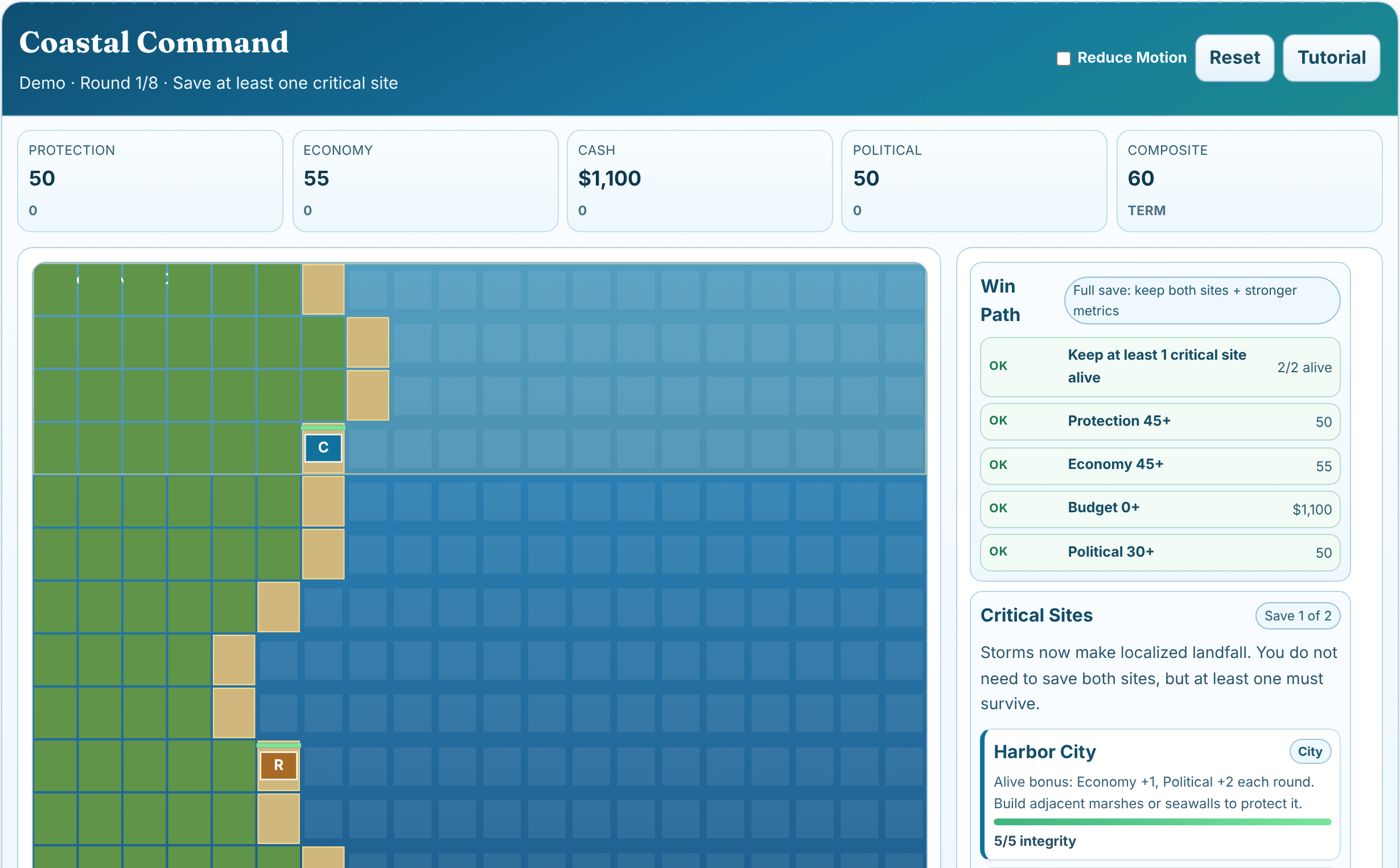
Coastal Command
Coastal Command is a short simulation game built for the marine policy course. Over a handful of rounds you spend a limited budget on marsh restoration, seawalls, and development while storms test your choices and political support rises and falls. It runs in a browser and keeps a class leaderboard.
Courses
- MARS 4400/6400, Introduction to Marine Policy. The environmental laws and management structures that govern ocean and coastal policy, taught through current resource issues. Offered each spring.
- MARS 1020, Biology of the Marine Environment. Marine organisms and ecosystems, the diversity of marine life, and how people affect it.
- MARS 8990, Advanced Topics in Marine Sciences: AI for Marine Data. A graduate topics course, first taught in fall 2024.
Mentoring
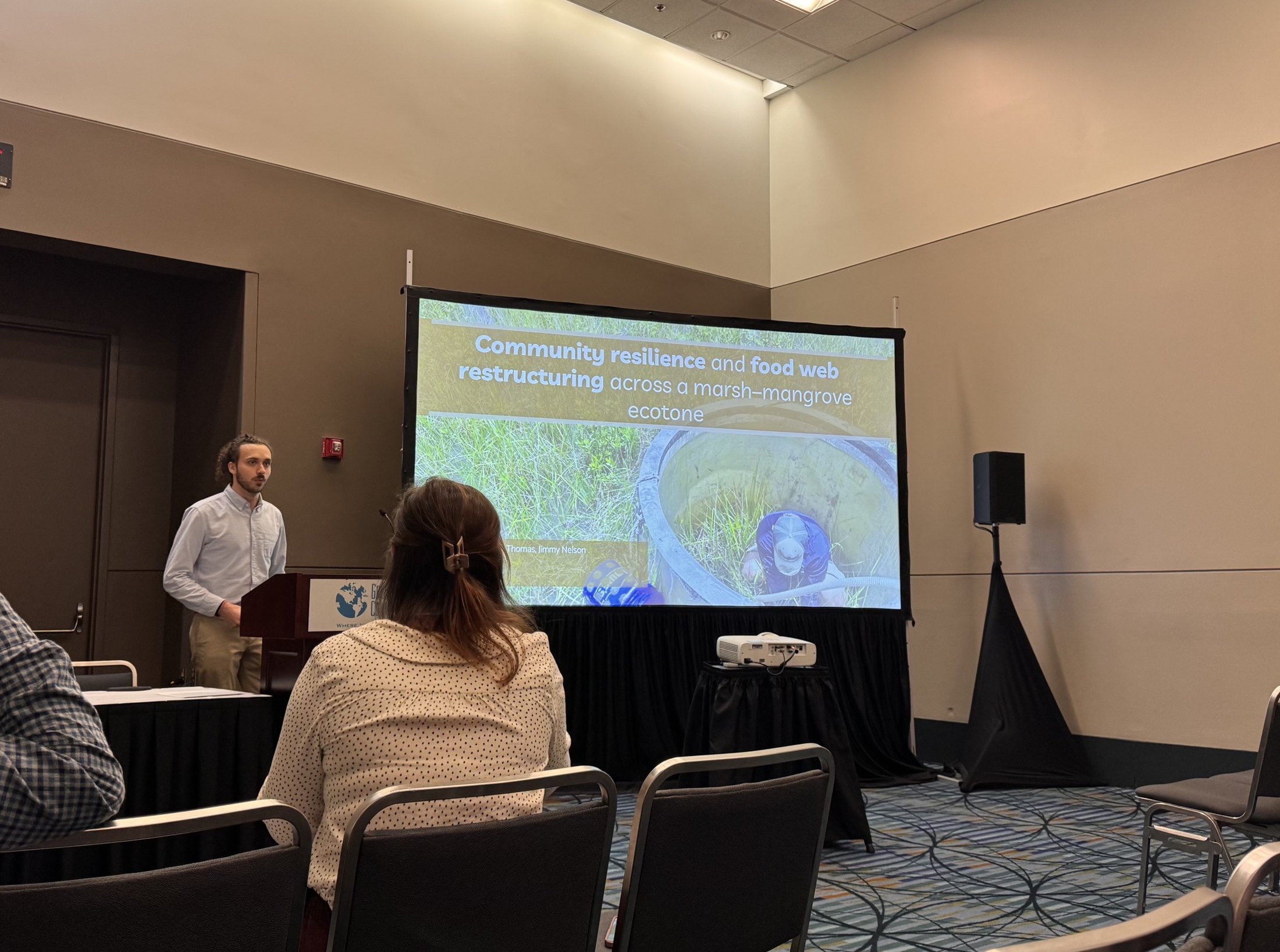
Students in the lab learn by doing the work. Most projects put the same person in the field, in the isotope lab, and at a keyboard writing the analysis in R or Python, so nobody hands their samples off and waits for an answer.
Jimmy has advised Ph.D. and M.S. students since 2016, supervised eight undergraduate capstone theses, and mentored NSF Research Experiences for Undergraduates students at the Plum Island Ecosystems LTER since 2011. In 2021 the College of Sciences at the University of Louisiana at Lafayette named him Outstanding Doctoral Student Mentor.
If you are a student interested in research experience, see how to join the lab.