What fuels a coastal food web, and what happens when the coast changes?
We are the Nelson Ecosystem Lab at the University of Georgia. We trace the energy in fish, shrimp, and crabs back to the marsh grass, mangroves, and seagrass it came from, and we measure how that shifts as the landscape does.

The questions we keep asking
Research overviewWhat fuels a coastal food web?
Carbon, nitrogen, and sulfur isotopes record what an animal has been eating. We use them to measure which habitats fuel coastal food webs and how that changes.
Where on the landscape is the energy?
E-scapes combine those diet estimates with habitat maps to show where the energy a consumer needs is on the landscape, and what happens when the map changes.
What happens when the coast changes?
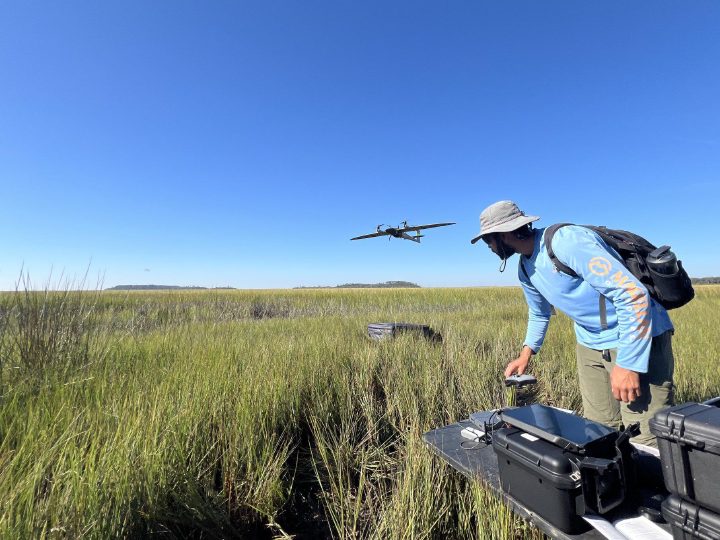
Mangroves are replacing salt marsh, marsh is being lost, and estuaries are warming. We work where those changes are underway to learn what they mean for nekton: the fish, shrimp, and crabs that swim through them.
People
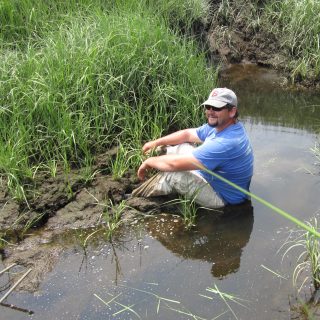
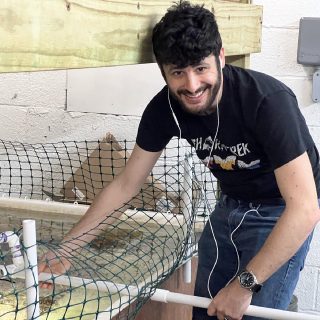
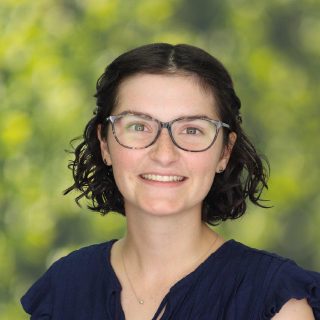
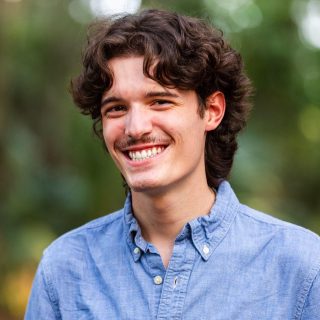
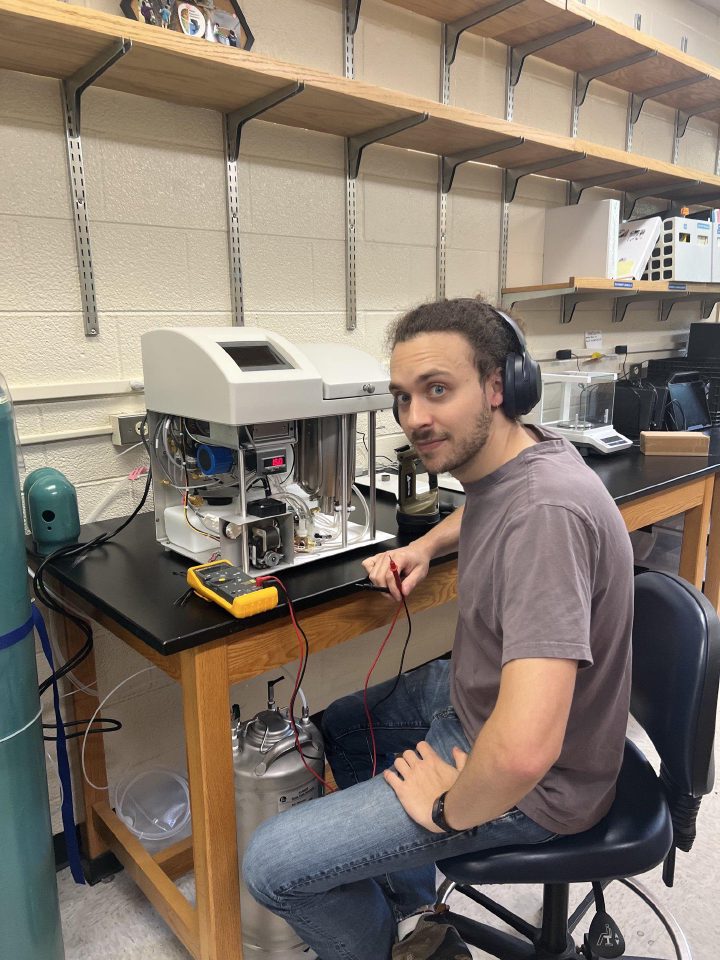
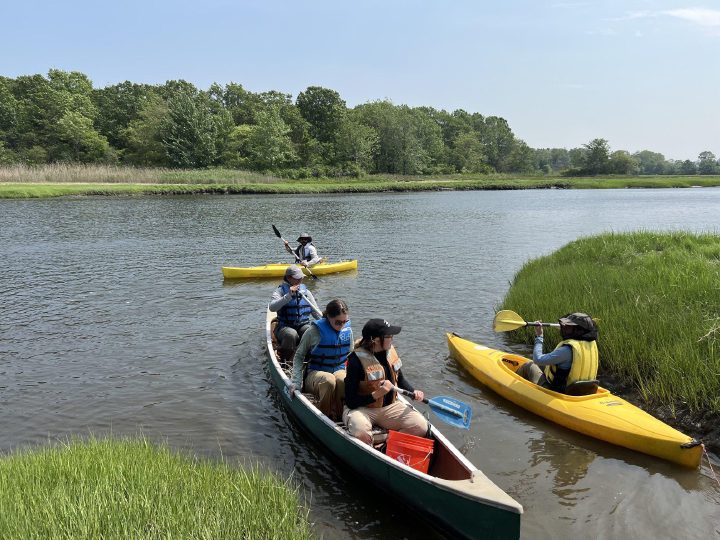
Everyone in the labThe people who wade in, run the samples, and write it up.

Recent papers
All 60 publications- (23 authors) (2026).
Scale-dependent effects of species richness and asynchrony regulate the temporal stability of consumer-mediated nutrient dynamics. Proceedings of the National Academy of Sciences 123(37): e2532469123.
doi:10.1073/pnas.2532469123Open access
- (2026).
High-Resolution Unoccupied Aerial System Baseline Mapping of Mangrove Expansion in a Fragmented Louisiana, USA Salt Marsh. Estuaries and Coasts 49(5): 165.
doi:10.1007/s12237-026-01788-1Open access
- (2026). Isotopic insights into nutrient contributions and transport pathways in north-central Florida Bay. Estuarine, Coastal and Shelf Science 333: 109765.
Field notes
All field notes- February 18, 2026 Website launched
Work with us
We welcome students and postdocs who like field work, careful measurement, and writing code, in roughly equal parts.